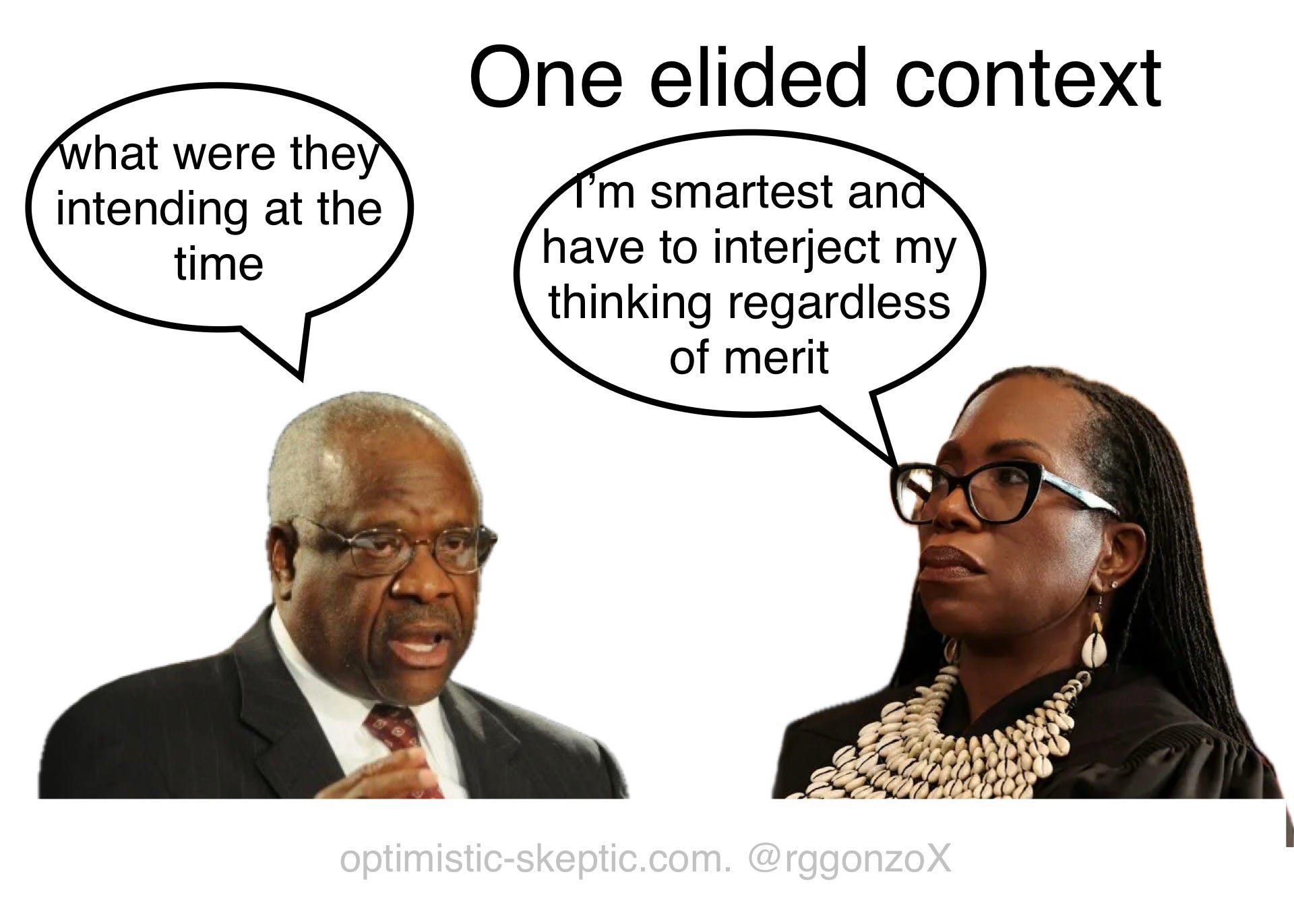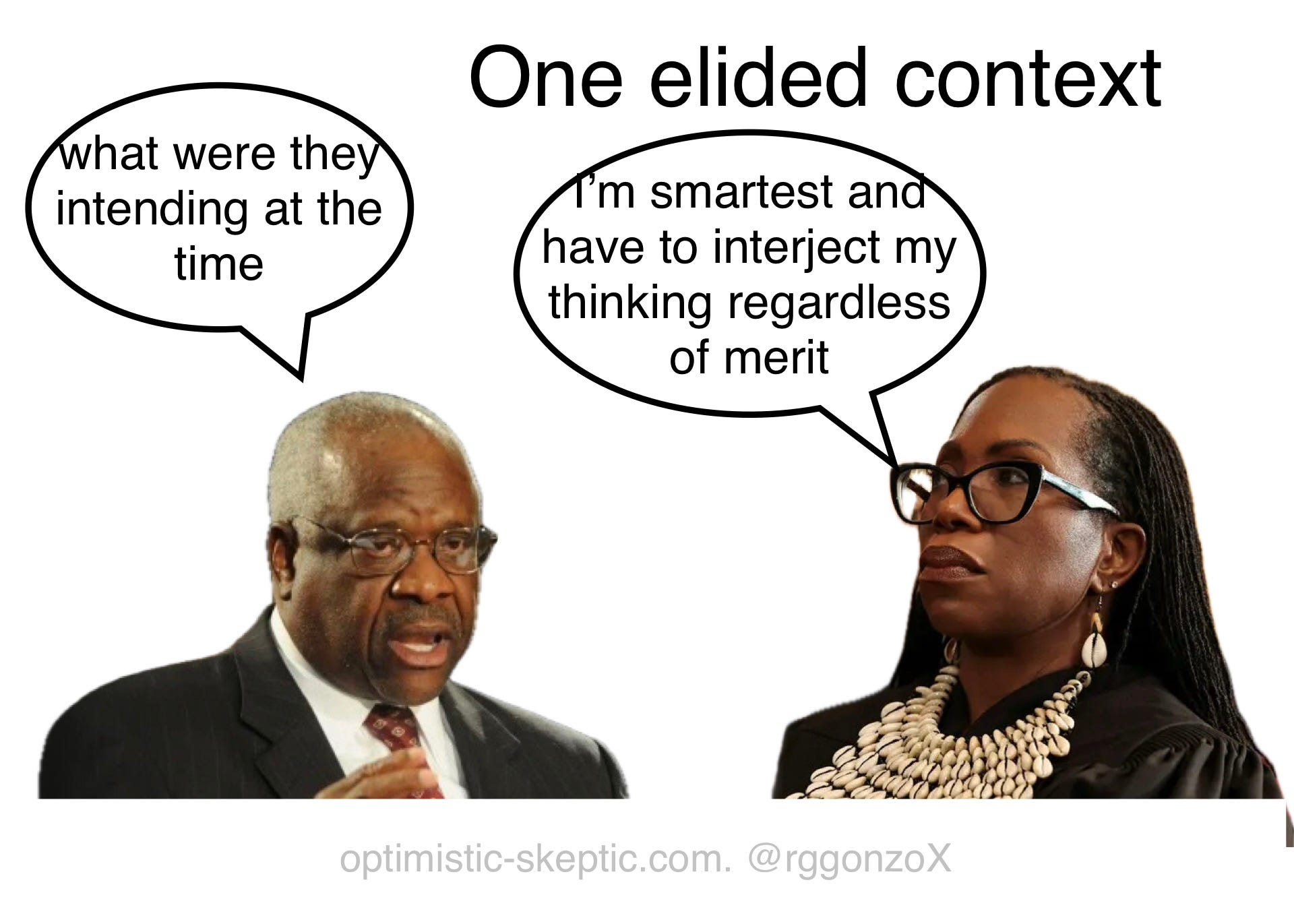
Unsurprisingly—and even worse—Justice Ketanji Brown Jackson elides important historical and practical context in her separate concurrence to sharply attack Justice Clarence Thomas’s dissent.
Today, billions of people around the world would seek to come to the United States absent significant immigration limits. Tens of millions have entered illegally in recent years, and an entire industry has emerged enabling foreigners to travel to U.S. territory specifically to deliver a child who automatically gains citizenship. These modern realities create powerful incentives and enforcement challenges that simply did not exist in 1868.
In that context, it is fair and reasonable to conclude that the original public understanding of the 14th Amendment was centered on securing citizenship for freed slaves and their children after the Civil War and Dred Scott v. Sandford. The framers had no concept of birth tourism or the need for strict, large-scale immigration controls.
Background
In 1857, Dred Scott v. Sandford denied citizenship to Black Americans. The Civil War (1861–1865) produced horrific casualties—roughly 620,000–750,000 dead, a scale equivalent to millions in today’s population—to end slavery. Congress responded with the Civil Rights Act of 1866, which declared that all persons born in the United States and not subject to any foreign power (excluding Indians not taxed) were citizens, with the primary aim of protecting freed Black Americans. The 14th Amendment, ratified in 1868, embedded this principle in the Constitution—“All persons born or naturalized in the United States, and subject to the jurisdiction thereof, are citizens…”—to safeguard it against future repeal, legislation, or executive action.
In 1898, United States v. Wong Kim Ark addressed the citizenship of a child born in the U.S. to Chinese parents who were permanently and legally domiciled residents. The Court held he was a citizen, frequently referencing the parents’ domicile. It did not involve or address birth tourism or children of temporary visitors or illegal entrants.
The 2026 Decision and Jackson’s Concurrence
In Trump v. Barbara, five justices ruled that the 14th Amendment’s Citizenship Clause includes birthright citizenship for children of illegal aliens. Four justices ruled it did not.
Justice Jackson wrote a separate concurrence primarily to criticize Thomas. She used unusually inflammatory language, accusing his dissent of being “even worse” for supposedly eliding the “anticaste, antisubordination reset” purpose of the Reconstruction Amendments and contradicting his general commitment to a “colorblind” Constitution. This personal and rhetorical escalation was unnecessary. The majority opinion already addressed the constitutional question. Jackson’s concurrence added little new legal analysis while turning a serious interpretive disagreement into a pointed personal rebuke.
Thomas’s dissent, while lengthy and vigorous, engaged the historical record on the Clause’s focus during Reconstruction. Reasonable originalists can debate how the 1868 understanding of “subject to the jurisdiction thereof” applies to today’s vastly different world of mass migration and deliberate birth tourism. Jackson’s framing downplays those changed circumstances and the framers’ narrower remedial focus.
The concurrence was not needed to resolve the case. It served mainly to signal broader ideological disagreement in unusually sharp terms.